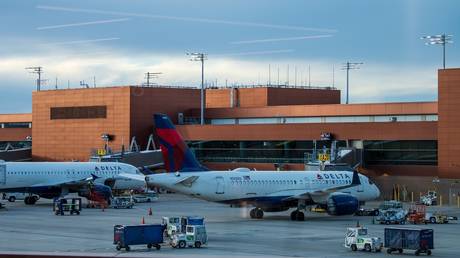
When an airline's weight and balance software goes down on a Sunday morning, planes sit on the tarmac. You don't need a Hollywood thriller to see how fragile modern travel gets. A Delta system failure on November 22, 2026 hit right as Thanksgiving travel kicked off, leaving thousands of flights delayed or canceled across the United States.
FlightAware data showed well over 1,900 to 2,000 Delta delays and more than 200 cancellations as the day wore on, hitting a large share of the carrier's schedule and rippling through hubs like Atlanta, New York, Boston, and Minneapolis. Federal Aviation Administration advisories briefly put a Delta-only ground stop on flights into Hartsfield-Jackson Atlanta International Airport before shifting to a ground delay program and lifting that traffic restriction later in the morning. Officials and the airline stated there was no evidence of a cyberattack.
Honestly, it's wild that a single database hiccup can stall a major airline right before peak holiday travel. And even wilder that we're having this exact conversation again after a rough stretch of aviation tech troubles in November 2026 and Delta's massive July 2024 CrowdStrike meltdown.
Why a Delta System Failure Hits So Hard
Most flyers picture an IT glitch as a slow check-in screen or a broken lounge display. That's not what happened here. Weight and balance software isn't optional window dressing. Before any commercial jet leaves the gate, dispatchers, pilots, and load planners have to verify total aircraft weight and where the center of gravity sits. Too far forward or too far back, and pitch control gets sluggish or tricky during rotation and climb.
When automated loading and weight tools falter, crews have to fall back on manual calculations and hand-counted bag tallies. That takes time. A lot of time. When you're running hundreds of turns a day through Atlanta, even a 20- or 30-minute snag per turn snowballs fast into missed crew legalities, tight gate swaps, and afternoon delays that have nothing to do with the original software bug.
From years of watching airline operations melt down and recover, the real trap isn't the first hour of an outage. It's the domino effect. A plane lands late in New York or Boston, its next crew times out, and suddenly a morning glitch is still wrecking evening departures.
The Bigger Pattern Behind Recent Aviation Glitches
Look at the calendar around November 2026 and you can see why fliers are on edge. Earlier in the month, on November 13, an FAA telecommunications failure triggered a major nationwide ground stop that snarled air travel across the country, and United Airlines also dealt with a separate tech disruption in mid-November.
Then came Sunday's weight and balance failure at Delta. Reports pointed to database and loading-information trouble rather than a hack, and the FAA made clear the Atlanta ground stop and ground delay were tied to Delta's request and operations rather than an air traffic control failure. Still, having high-profile tech hiccups stack up weeks apart makes passengers wonder whether legacy airline and infrastructure software is straining under heavy traffic.
- Fragile handoffs: Airlines rely on dozens of interconnected databases for bags, cargo, fuel, crew schedules, and dispatch clearances. One broken link slows down the people on the ramp.
- Holiday timing: AAA projected nearly 6 million Americans flying domestically during the seven-day Thanksgiving window from November 24 to November 30, 2026, with average round-trip domestic fares up roughly 17% to around $800. When tickets cost that much and planes are full, there's zero slack in the system.
- Memory of 2024: Flyers haven't forgotten July 2024, when a faulty CrowdStrike update sparked a multi-day meltdown for Delta that led to over 7,000 canceled flights and a bitter legal fight. Even when a newer outage is smaller or resolved faster, people react with a hair trigger.
Is the U.S. aviation system headed toward another massive collapse every holiday? Not necessarily. Most flights still get airborne safely because safety rules don't bend when software breaks—crews just slow down and verify manually. At the same time, claiming everything is "just a one-off" rings a little hollow when travelers keep seeing back-to-back tech headaches.
What Travelers Usually Get Wrong During an Outage
A common mistake is standing in a 200-person customer service line at the airport while your flight is still technically "delayed" rather than canceled. If the system hasn't officially canceled your leg yet, agents often have fewer rebooking levers, and lines move at a crawl.
Another mistake is assuming that once an airline says a system is "restored," everything snaps back to normal ten minutes later. It doesn't. Aircraft and crews are scattered across the map, and recovery often drags into the next day.
Practical Steps If Your Flight Gets Caught in a Tech Snag
If you're flying this week or any peak holiday weekend, a few habits save real headaches:
- Check the app before leaving for the airport. Watch for travel waivers early. If an airline posts a waiver, changing your trip before the airport turns into a zoo is usually much easier.
- Use chat and self-service rebooking first. Message the airline in the app or look for alternate routings online while you also call the reservation line on speakerphone. Don't rely on just one channel.
- Know your refund and care basics. Under U.S. Department of Transportation rules, if your flight is canceled or significantly changed and you choose not to travel, you're entitled to a refund to your original form of payment, even on non-refundable tickets. When delays are caused by something within the airline's control, carriers also commonly provide meal vouchers or hotel rooms when needed, though policies vary by situation.
- Skip risky tight connections when possible. During recovery days after a tech outage, a 40-minute connection through a mega-hub like Atlanta is basically a coin flip. If you have a choice of routing or an earlier departure, take the extra buffer.
Software will glitch again. Planes will still fly safely when it does, because manual checks and strict dispatch rules exist for a reason—even if your dinner plans get pushed back by three hours.


