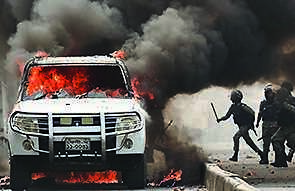
A $428 million hit in just 18 days isn't just a bad month for factory owners. It's a flashing red warning light for the entire global apparel supply chain.
Between November 1 and November 18, 2026, labor unrest and operational disruptions across 317 surveyed readymade garment factories in Bangladesh racked up $428 million in free-on-board (FOB) production losses, according to findings released by the Bangladesh Garment Manufacturers and Exporters Association (BGMEA). Worse yet, international buyers already shifted 59 million pieces of confirmed orders—worth $254 million—to rival sourcing markets.
If you've worked in apparel sourcing, trade compliance, or emerging-market manufacturing, that second number hurts even more than the first. Production pauses happen. Buyers redirecting confirmed volume out of a country is how market share quietly leaks away.
What the $428 Million Survey Actually Captures—and What It Misses
Let's be straight about the numbers. The $428 million figure comes from 317 factories that responded to a short-notice BGMEA survey covering November 1 to 18, with some facilities shut for up to 16 days. BGMEA itself notes that more than 600 factories were affected and that instability continued past the survey window, meaning the true tally is almost certainly higher.
Just looking at a single headline figure misses the real mechanics of a factory shutdown. When lines stop in hubs like Gazipur, Ashulia, and Mirpur, fixed costs don't pause. Rent, utilities, bank interest, and core payroll keep ticking while fabric sits uncut.
To rescue late shipments and hold onto anxious retail accounts, manufacturers have been turning to expensive air freight, absorbing steep price discounts, or eating cancellations. On paper, a factory might still ship a late order. In reality, air cargo can wipe out whatever razor-thin margin remained on a basic knit or woven item.
Honest truth from the supply chain floor? Buyers don't usually panic over one isolated disruption. They panic when timelines become unpredictable across consecutive weeks and they can't get clear answers on when shipping containers will move.
Why Wages and Living Costs Collided in Late 2026
You can't separate these November losses from the broader squeeze hitting both workers and factory owners across Bangladesh.
On one side are garment workers pushing hard for higher pay—with demands centered around a ৳30,000 monthly minimum wage against the existing ৳12,500 benchmark, and some labor coalitions proposing even higher figures—as food, rent, transport, and healthcare costs bite harder amid stubborn inflation. When daily staples eat up almost every taka a worker earns, wage negotiations aren't abstract policy debates. They're survival math.
On the other side are manufacturers pointing to a brutal cost-price vise. According to industry data cited by BGMEA, production costs have climbed roughly 25% to 30% over the past three years while average export prices slipped by 2.6%. Add bank lending rates around 12% to 16%, sharply reduced export incentives, energy bottlenecks, US tariff pressures of 10% to 20%, and looming Least Developed Country (LDC) graduation trade shifts, and factory margins look claustrophobic.
Even the debate over how to calculate a fair wage has turned sharp. The Centre for Policy Dialogue (CPD) has pushed back against BGMEA claims that its wage estimate double-counted housing costs, arguing instead for transparent, up-to-date data and a permanent, sustainable wage-setting framework that avoids street clashes and factory vandalism.
Both sides have real numbers. Neither side can wish away the other's constraints.
The Quiet Threat Behind Shifted Orders
A lot of coverage treats order diversion like a temporary detour. Sometimes it is. Often it isn't.
When international brands move 59 million pieces worth $254 million elsewhere, they don't always snap their fingers and return the next quarter. Re-allocating technical packages, fit approvals, fabric mills, and compliance audits takes time and money. Once a sourcing manager proves a rival country can hit lead times during a crunch, that secondary supplier earns a permanent seat at the table.
That's especially dangerous right before peak seasonal shipments and ahead of Bangladesh's LDC graduation transition, when preferential market access rules tighten and competition from countries like Vietnam, India, and Cambodia intensifies. Before the unrest hit in full force, BGMEA data from the Export Promotion Bureau showed garment exports had grown 5.8% year-on-year to $13.7 billion during the July–October stretch of FY2026–27. Momentum existed. Unrest threatens to chew right through it.
Common Misconceptions About Garment Sector Unrest
- Myth: A factory reopening means losses stop immediately. Restarting stitching lines after multi-day closures is messy. Backlogged orders, delayed raw materials, congested schedules, and overtime premiums stretch the financial drag well past the day gates reopen.
- Myth: Only small, non-compliant workshops take the hit. Large, export-oriented, and compliant factories in industrial belts like Gazipur and Ashulia have faced closures and highway blockades too. Scale doesn't make a facility immune to transit gridlock or labor standoffs.
- Myth: Higher wages automatically destroy competitiveness—or leave them unchanged. Wages matter, yes, yet unit labor cost is only part of total landed cost. Productivity, energy reliability, port turnaround, lead times, and buyer pricing all shape whether a factory stays competitive.
Practical Next Steps for Buyers, Factory Leaders, and Policymakers
If you're managing apparel sourcing or watching South Asian trade closely, don't wait for another survey to see how the dust settles.
- Audit critical-path lead times order by order. Separate orders already in cutting/sewing from future bookings, and model air-freight vs. sea-freight tradeoffs before shipping windows slip past holiday or spring retail floors.
- Avoid knee-jerk exits without checking capacity. Moving orders to other countries solves immediate schedule risk only if alternative factories actually have open capacity, quality consistency, and compliance readiness—otherwise you just trade one bottleneck for another.
- Push for predictable wage mechanisms. Brands and industry associations have more leverage than they sometimes admit when they support clear, data-backed wage timelines and responsible buying prices instead of squeezing margins after every shock.
- Watch the Minimum Wage Board milestones closely. Track official board deliberations, proposed wage structures, and implementation dates—such as the December 2026 target timeline—so budgets and forecasts reflect real numbers rather than rumors.
Bangladesh remains one of the world's indispensable apparel hubs, built over decades of scale and specialization. Protecting that standing requires fixing both worker living standards and industrial stability at the same time—because losing trust costs far more than a single lost week on the factory floor.